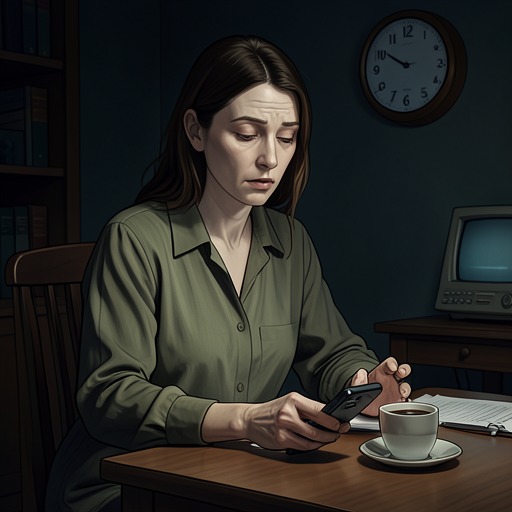
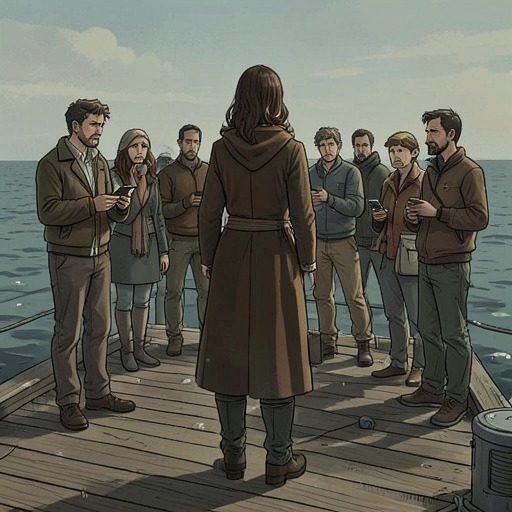
Laura Blacklock is reported missing
The Woman in Cabin 10Laura Blacklock is reported missing when the Harringay Echo publishes an appeal on 26 September, after her partner, Judah Lewis, alerts others that she has not returned from the Aurora Borealis. The report turns a private failure of contact into a public case, while preserving the uncertainty that surrounds Laura’s whereabouts: the cruise company had initially assumed she had curtailed her trip, and the body found in the North Sea two days later was only speculated to be hers.
The report and its circumstances
The Harringay Echo website identifies Laura as a 32-year-old Londoner residing in West Grove, Harringay, and says that friends and relatives are increasingly concerned. Judah, 35, was not aboard the ship. He raised the alarm after Laura did not return his messages and attempts to contact her failed. His absence from the voyage matters: there was no partner on board who could immediately establish whether she had chosen to leave, become unreachable, or disappeared involuntarily.
The report places Laura’s absence aboard the Aurora Borealis, an exclusive cruise ship whose maiden voyage had left Hull Harbour the previous Sunday. The company said that Laura had not been seen since a planned trip to Trondheim on Tuesday, 22 September. It had initially treated her absence as a decision to curtail the holiday rather than as an unexplained disappearance. Only when she failed to return to the United Kingdom on Friday, and Judah raised his concern, did the company recognize that her departure had not been planned.
Uncertainty aboard the ship
The distinction between a supposed early departure and a disappearance is the report’s central uncertainty. On board, Laura had been watching the ship leave Hull Harbour and enter the North Sea; later, the vessel was described as being in international waters and on its way to Trondheim. The report gives no account of how Laura could have left the ship, and does not establish that she did. In retrospect, her confinement in a small, windowless space below deck makes the company’s assumption especially stark: her absence was interpreted as a voluntary change of plans while she remained trapped aboard.
That uncertainty also echoes the difficulty Laura faced in getting her own account taken seriously. When she reported what she believed she had witnessed, Nilsson asked how much she had drunk and later argued that there was no evidence to support her account. Laura objected to having her anxiety, medication, sleeplessness, and recent experience treated as reasons to dismiss what she said she had seen. The missing-person report shifts the question from whether Laura’s testimony is credible to whether anyone can establish where she is, but it does not erase the earlier credibility dispute.
Family concern and public attention
Laura’s mother, Pamela Crew, says that it is extremely out of character for her daughter not to make contact and appeals for anyone who has seen her to come forward. The appeal gives the report a second measure of the disappearance: beyond the company’s account of a potentially voluntary departure, people close to Laura recognize her silence as abnormal. The newspaper’s use of her age, home address, partner’s concern, and mother’s appeal turns those personal details into information through which the public might identify or locate her.
The report also records how the delay came about without resolving who was responsible for it. The company’s first interpretation allowed Laura’s absence to pass as a choice; Judah’s failed attempts to reach her and the missed return to the United Kingdom changed that interpretation. The sequence shows how, aboard a cruise ship, a missing passenger can remain unrecognized when an unexplained absence is absorbed into an assumption that the passenger has simply left.
Later reports and the status of the case
On 28 September, BBC News reports that Danish fishermen have dredged up a woman’s body in the North Sea off the coast of Norway. The report says the discovery lends weight to speculation that the deceased may be Laura, and that the woman’s identity is still being confirmed. Scotland Yard has been called in to assist the investigation, while Judah refuses to respond to the speculation beyond describing himself as devastated by Laura’s continued disappearance. The news therefore intensifies the case without confirming that Laura is dead.
Laura is ultimately rescued alive. After reaching safety, she speaks to Judah, who promises to take her account to Scotland Yard; police arrange medical treatment for her injured feet and ankle and have her medication represcribed. Her return changes the meaning of the missing-person report: it records a real failure to locate her, but its apparent trajectory toward a possible death was not the truth of what happened. The episode makes the gap between public accounts and events aboard the ship part of the mystery itself.